
Stainless steel pipes are widely used across India in construction, chemical plants, food processing, oil and gas, pharmaceuticals, water treatment, and many other industries. One of the first questions buyers usually ask is simple: How much does stainless steel pipe cost in India?
There is no single price for every stainless steel pipe. The cost depends on the stainless steel grade, pipe size, wall thickness, manufacturing method, quantity, surface finish, and current raw material prices.
In this guide, we explain stainless steel pipe prices in India in simple terms and look at the main factors that can affect your final cost.
What Is the Average Stainless Steel Pipe Price in India?
In India, stainless steel pipe prices can generally range from around ₹180 to ₹600 or more per kg, depending on the grade, size, specifications, and market conditions.
These figures are only a general price range. Actual quotations can be higher or lower depending on the product and supplier.
For example, a standard SS 304 pipe may cost less than an SS 316 or SS 316L pipe. Similarly, a seamless pipe usually costs more than a welded pipe because its production process is different.
For an accurate price, buyers should always request a quotation based on the required grade, outside diameter, thickness, length, quantity, and applicable standard.
What Factors Affect Stainless Steel Pipe Cost in India?
Several things determine how much you will pay for stainless steel pipes.
1. Stainless Steel Grade
The grade is one of the biggest factors affecting the price.
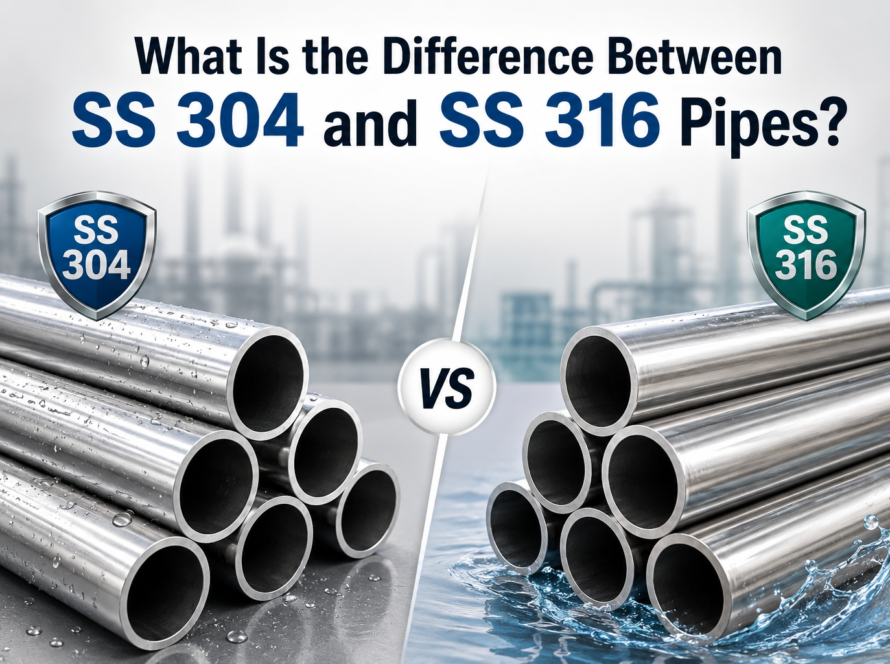
SS 304 is one of the most commonly used stainless steel grades because it provides good corrosion resistance and durability for many general applications. SS 316 and 316L contain additional alloying elements and offer better corrosion resistance in demanding environments.
As a result, SS 316 and 316L pipes are generally more expensive than SS 304 pipes.
Special grades such as duplex, super duplex, and high-alloy stainless steels can cost considerably more.
2. Seamless or Welded Pipe
The manufacturing method also affects the price.
A stainless steel seamless pipe is manufactured without a welded seam. Seamless pipes are commonly selected for applications involving high pressure, high temperatures, or demanding operating conditions.
Welded stainless steel pipes are produced by forming stainless steel material and welding the joint. They can be a more economical choice for many applications.
The right option depends on the pressure rating, application, standard, and project requirements rather than price alone.
How Stainless Steel Pipe Manufacturing Affects Price
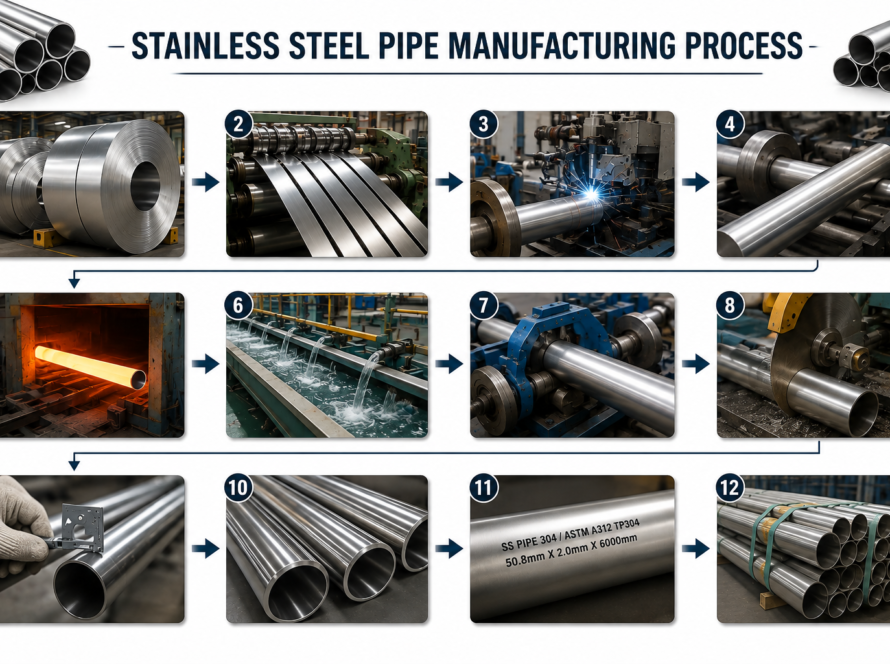
The stainless steel pipe manufacturing process involves several stages, and each stage adds to the final production cost.
Depending on the type of pipe, manufacturers need raw materials, forming or extrusion equipment, heat treatment, welding systems, finishing equipment, testing facilities, skilled workers, and quality-control processes.
During steel pipe manufacturing, dimensional accuracy is also important. Pipes may need to meet standards such as ASTM, ASME, DIN, EN, or other customer-specific requirements.
More demanding specifications generally require additional production and testing, which can increase the final price.
Stainless Steel Seamless Pipe Manufacturing
The production of a stainless steel seamless pipe is more complex than simply rolling a sheet and welding it.
The process generally starts with a suitable stainless steel billet or hollow. The material is processed to achieve the required diameter and wall thickness. Depending on the manufacturing route, further operations can include heat treatment, cold working, straightening, pickling, finishing, and testing.
Because of these additional manufacturing requirements, seamless pipes can have a higher production cost.
However, they are widely used in industries where performance under demanding pressure and temperature conditions is important.
What Is SS Pipe Manufacturing?
SS pipe manufacturing is simply the production of pipes using stainless steel materials. However, not all SS pipes are the same.
Manufacturers can produce different combinations of:
- Grades such as 304, 304L, 316, and 316L
- Seamless and welded pipes
- Different outside diameters
- Different wall thicknesses and schedules
- Round and other tube profiles
- Industrial and sanitary finishes
- Custom lengths and specifications
This is why comparing stainless steel pipe prices only on a per-kg basis may not tell the complete story.
Stainless Steel Tube Manufacturing vs. Pipe Manufacturing
Although the words “pipe” and “tube” are sometimes used interchangeably, they can refer to different products and dimensional conventions.
In stainless steel tube manufacturing, close dimensional tolerances, surface quality, outside diameter, and wall thickness can be particularly important. Stainless steel tubes are commonly used in heat exchangers, instrumentation, automotive systems, food processing equipment, pharmaceutical equipment, and structural applications.
Pipes, on the other hand, are frequently specified according to nominal pipe size and schedule and are widely used to transport liquids and gases.
Understanding this difference helps buyers order the correct material and avoid unnecessary costs.
Why Do Stainless Steel Pipe Prices Keep Changing?
Stainless steel prices do not remain fixed throughout the year.
The cost can change because of fluctuations in raw material and alloy prices, especially nickel and chromium. Energy costs, transportation charges, demand, supply availability, currency movements, and international market conditions can also influence prices in India.
For large projects, even a small change in the per-kg price can make a noticeable difference to the total material budget.
That is why buyers should confirm the latest price before placing a bulk order.
How to Get the Best Stainless Steel Pipe Price
The cheapest quotation is not always the best option. Buyers should compare both price and product quality.
Before ordering, clearly mention the required grade, size, thickness or schedule, length, quantity, manufacturing type, standard, and testing requirements. Providing complete specifications makes it easier for a manufacturer or supplier to offer an accurate quotation.
It is also worth checking material certificates, manufacturing standards, dimensional tolerances, testing facilities, and delivery timelines.
Choosing an experienced stainless steel pipe manufacturing company can help reduce the risk of receiving material that does not meet your project’s specifications.
Does Bulk Quantity Reduce the Cost?
In many cases, yes.
Manufacturers and suppliers may offer better rates for larger quantities because production, packaging, handling, and logistics can be planned more efficiently.
However, discounts depend on the grade, pipe size, current stock, manufacturing requirements, and total order quantity.
If your project requires a large amount of material, requesting a bulk quotation directly from an SS pipe manufacturing company or established supplier may help you get a more competitive price.
Final Thoughts
So, how much does stainless steel pipe cost in India?
A general market range can be around ₹180 to ₹600+ per kg, but there is no fixed price that applies to every stainless steel pipe. The actual cost depends on grade, dimensions, wall thickness, seamless or welded construction, quantity, testing requirements, and changing raw material prices.
Whether you are looking for stainless steel tube manufacturing, steel pipe manufacturing, stainless steel pipe manufacturing, stainless steel seamless pipe, or SS pipe manufacturing, it is important to compare products using the complete technical specification rather than price alone.
For the most accurate cost, share your required grade, size, schedule or thickness, quantity, standard, and delivery location with the manufacturer or supplier and request an updated quotation.