
Stainless steel pipes are widely used in industries where strength, durability, and resistance to corrosion are important. Among the many stainless steel grades available, SS 304 and SS 316 are two of the most commonly used options.
At first glance, both pipes may look almost the same. However, their chemical composition, corrosion resistance, durability, and suitable applications are different. Choosing the right grade depends mainly on where the pipe will be used and what kind of environment it will face.
What Is SS 304?
SS 304 is one of the most popular stainless steel grades used across different industries. It contains chromium and nickel, which help protect the steel from rust and corrosion.
SS 304 pipes offer a good balance between strength, durability, appearance, and cost. They are commonly used in food processing, kitchen equipment, water systems, construction, and general industrial applications.
One of the biggest advantages of SS 304 is its versatility. It performs well in many everyday environments and is usually a practical choice when extremely high corrosion resistance is not required.
What Is SS 316?
SS 316 is another widely used stainless steel grade, but it offers better corrosion resistance than SS 304. The main reason is the addition of molybdenum to its composition.
Molybdenum helps SS 316 perform better in environments where the material may come into contact with salt, chemicals, or other corrosive substances. Because of this, SS 316 pipes are often selected for marine applications, chemical industries, pharmaceutical plants, and other demanding environments.
The higher corrosion resistance also makes SS 316 a preferred option when long-term performance is more important than the initial material cost.
SS 304 vs SS 316: Key Differences
The biggest difference between SS 304 and SS 316 is their resistance to corrosion.
SS 304 provides excellent general-purpose corrosion resistance and is suitable for most normal environments.
SS 316 provides a higher level of corrosion resistance, especially in environments containing chlorides and chemicals.
Here are some important differences:
| Feature | SS 304 | SS 316 |
|---|---|---|
| Corrosion Resistance | Very good | Excellent |
| Molybdenum | Not normally added | Added |
| Resistance to Chlorides | Good | Better |
| Common Applications | Food, kitchen, construction | Marine, chemical, pharmaceutical |
| Cost | More economical | Generally more expensive |
| General Durability | Excellent | Excellent |
Which Pipe Is Better for Corrosion Resistance?
If corrosion resistance is the main concern, SS 316 is generally the better choice.
SS 304 works well in normal indoor and outdoor conditions. However, if the pipe is exposed to seawater, salt, chemicals, or a high-moisture environment, SS 316 can provide better protection and longer service life.
This does not mean SS 304 is a poor choice. In many applications, its corrosion resistance is more than sufficient, making it a cost-effective option.
SS 304 and SS 316 Pipe Applications
SS 304 pipes are commonly used in:
- Food processing equipment
- Kitchen and catering equipment
- Water and plumbing systems
- Construction projects
- Storage tanks
- General industrial machinery
SS 316 pipes are commonly used in:
- Marine and coastal applications
- Chemical processing plants
- Pharmaceutical industries
- Medical equipment
- Food processing environments with higher exposure to salts
- Industrial applications involving corrosive chemicals
Manufacturing of Stainless Steel Pipes
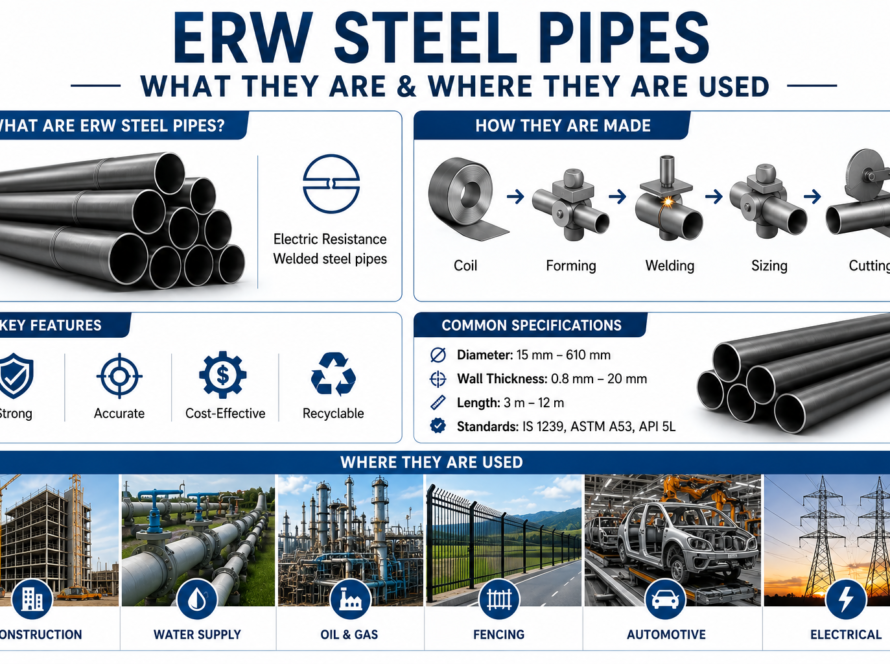
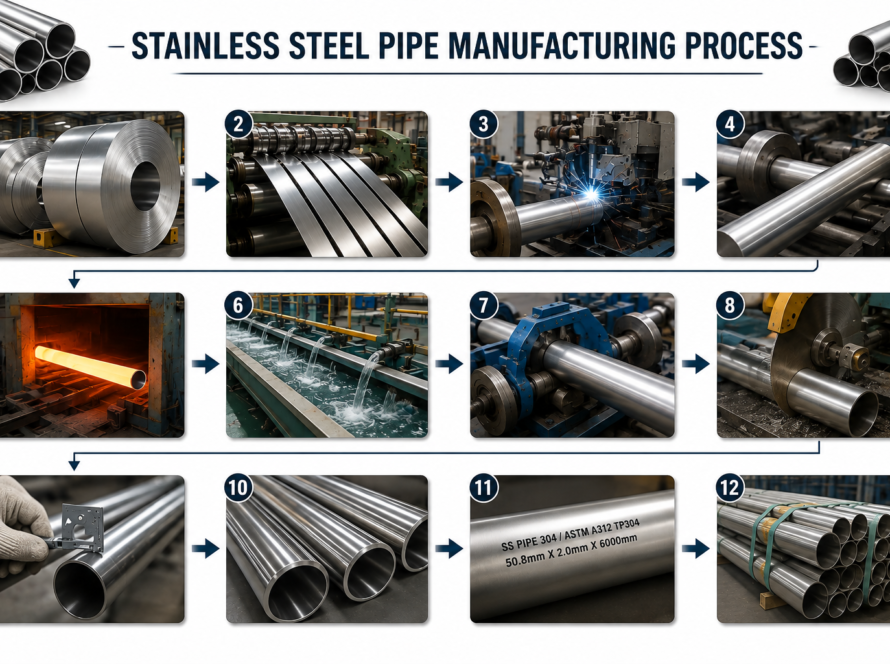
The quality of a pipe depends not only on the grade of steel but also on the manufacturing process. Professional Stainless Steel Tube Manufacturing involves careful control of material quality, dimensions, forming, welding or processing, finishing, and inspection.
During Steel Pipe Manufacturing, manufacturers select the appropriate raw material and use suitable production methods according to the required pipe size, thickness, finish, and application.
In Stainless Steel Pipe Manufacturing, quality checks are important to ensure that the finished pipes meet the required dimensional and performance standards.
For applications that require a pipe without a welded seam, a Stainless Steel Seamless Pipe may be selected. Seamless pipes are produced without a longitudinal welded joint and are commonly considered for applications where pressure, strength, or demanding service conditions are important.
How to Choose Between SS 304 and SS 316?
The right choice depends on your application.
Choose SS 304 when you need:
- Good corrosion resistance
- Reliable strength and durability
- A cost-effective stainless steel solution
- Pipes for general industrial or commercial use
Choose SS 316 when you need:
- Higher corrosion resistance
- Better performance in salty or marine environments
- Greater resistance to certain chemicals
- Long-term performance in demanding conditions
Final Thoughts
SS 304 and SS 316 are both reliable stainless steel grades, but they are designed for slightly different requirements. SS 304 is an excellent all-round option for general applications, while SS 316 is better suited to environments where corrosion resistance is especially important.
The best choice should be based on factors such as the operating environment, exposure to chemicals or salt, required service life, and budget. Selecting the correct grade at the beginning can help improve pipe performance and reduce maintenance problems in the long run.